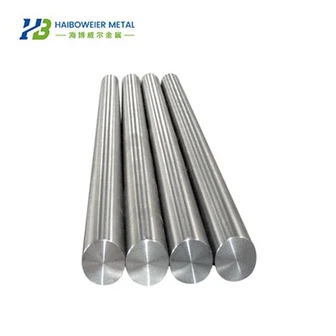
What is Gr1 Titanium Plate used for
In humanity's quest to explore the limits of materials, every breakthrough in metals has propelled civilization forward. From the agricultural revolution of the Bronze Age to the industrial boom of the Steel Age, to today's technological wave driven by composite materials, metals have always been the core vehicle for technological advancement. Gr1 titanium alloy plate (industrially pure titanium TA1), with its unique combination of high purity (Ti >= 99%), excellent corrosion resistance, good biocompatibility, and superior processability, is ushering in a materials revolution in high-end fields such as aerospace, marine engineering, biomedicine, and chemical energy.

In aircraft design, "weight reduction" is a constant pursuit. Gr1 titanium alloy plate, with its low density of 4.51 g/cm³ and tensile strength of 240-500 MPa, is an ideal material for achieving this goal. Its specific strength (strength-to-density ratio) is 1.5 times that of aluminum alloy, enabling aircraft structural components to maintain structural integrity even after tens of thousands of cyclic loads. For example, in aircraft engine component manufacturing, Gr1 titanium sheet is made into inlet guide vanes through hot and cold rolling processes. Its high-temperature resistance (stable over a wide temperature range of -253℃ to 600℃) prevents deformation of engine hot-end components due to thermal expansion. In the aerospace field, its non-magnetic properties prevent electromagnetic interference from affecting satellite electronic equipment, making it a key material for rocket fuel tank interlayers.
Seawater is a naturally highly corrosive medium, and the service life of ordinary metals in it is often measured in months. Gr1 titanium alloy sheet exhibits excellent resistance to chloride ion corrosion through the dense oxide film (TiO₂) that spontaneously forms on its surface, with corrosion resistance over 10 times that of 316L stainless steel. In deep-sea equipment, this property enables submarine pressure hulls to exceed the depth limitations of traditional materials. A certain submersible, using a spherical shell structure welded from Gr1 titanium sheet, exhibited a deformation of less than 0.1 mm when subjected to 1,100 atmospheres of pressure at the bottom of the Mariana Trench at 11,000 meters. In offshore platform construction, its low-temperature toughness (no brittleness at -253℃) and impact resistance make it the material of choice for Arctic liquefied natural gas (LNG) tanker piping systems, with over 200 tons of titanium used per vessel.
When metal enters the human body, safety and functionality are essential. Gr1 titanium alloy, as medical-grade pure titanium, has been rigorously verified for biocompatibility according to ISO 10993 standards and does not trigger immune rejection. Its elastic modulus (100-120 GPa) is close to that of human cortical bone, effectively preventing bone resorption caused by the "stress shielding" effect. In orthopedics, 3D-printed porous titanium alloy implants, by mimicking the gradient pore structure of natural bone (cortical bone porosity of 5%-10%, cancellous bone 50%-90%), increase bone cell attachment by 40% and produce 30% more callus formation three months after surgery than traditional steel plates.
In highly corrosive chemical environments, Gr1 titanium alloy plates demonstrate stability exceeding that of traditional materials. Its corrosion resistance to media such as nitric acid, sulfuric acid, and chlor-alkali makes it an ideal choice for heat exchangers, reactors, and piping systems. In the chlor-alkali industry, the use of titanium electrolytic cell cathode frames has increased electrolysis efficiency by 5%, resulting in annual profits exceeding 10 million yuan per line. In nuclear power plant construction, its radiation resistance (maintaining stable performance even after cumulative doses of 1×10⁷Gy) makes it a core material for nuclear fuel filtration equipment. Furthermore, titanium alloy's high thermal conductivity (21.9 W/(m·K)) and non-magnetic properties optimize heat exchange efficiency between collector tubes and thermal storage tanks in solar thermal power generation systems, increasing the photothermal conversion rate to 23%.
From the deep sea to space, from the human body to factories, Gr1 titanium alloy plate, with its unique combination of properties, is redefining the boundaries of metal applications. It is not only a witness to technological progress but also a driver of future innovation. In humanity's quest to explore the unknown, this "space metal" will continue to unleash its potential, providing the material foundation for building a more efficient, safer, and more sustainable world.